


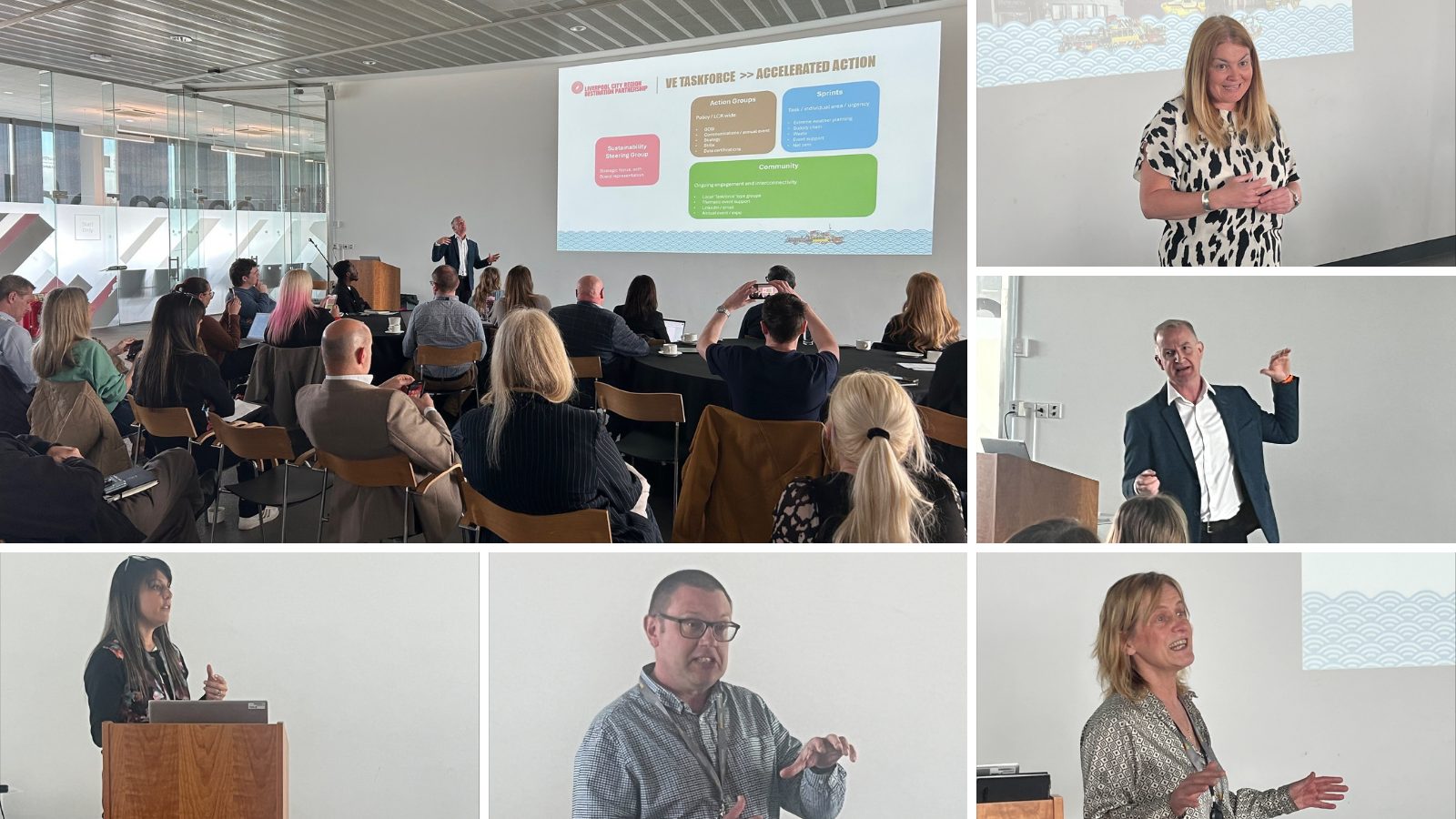
The GDS Sustainability Sprint, hosted by Liverpool City Region Destination Partnership, took place at the Museum of Liverpool on the morning of the 21st April, in the venue’s spacious Riverside Room, overlooking the Mersey.
A room full of visitor economy leaders, operators and public and private sector partners reconnected with a shared purpose, to move faster, work smarter and build a more resilient future for tourism across Liverpool City Region.
Natalie Wyatt, Managing Director of Liverpool City Region Destination Partnership, opened the event, set out the scale of the opportunity and the progress already being made.
“Sustainable tourism is one of the greatest opportunities facing the Liverpool City Region. Done well, it allows us to grow our visitor economy, protect our environment and create lasting value for our communities.
“The progress we’ve made through the Global Destination Sustainability Index shows just how far and how fast we can move when we share a clear vision and work together. Climbing the rankings faster than any other UK destination is a powerful signal of our ambition and our capability.
“This taskforce is about building on that success. It’s about turning momentum into leadership, innovation into impact, and making sustainability the lens through which our future growth is shaped. The potential ahead of us is immense and together, we have the chance to set a new standard for destinations everywhere.”
That momentum was a recurring theme throughout the session. With the Local Visitor Economy Sustainability Action Plan now in place and GDSI criteria becoming more ambitious in 2026, the sprint was designed to move the conversation decisively from strategy into delivery.
Janet Nuzum, Head of Tourism at Liverpool City Region Destination Partnership, emphasised that this work is about strengthening businesses as much as protecting places.
“This taskforce exists to support businesses where it really matters. Sustainability helps organisations save money, operate more efficiently and appeal to new markets. It improves staff engagement and builds long‑term resilience. This isn’t only about the environment, it’s about future‑proofing your business and being part of something bigger.”
The refreshed Sustainability Taskforce model reflects that thinking. A streamlined structure combining strategic leadership, targeted action groups and focused delivery sprints is designed to keep energy high and outcomes tangible.
One of the clearest examples of that practical approach came from Huw Jenkins, Lead Officer for Transport Policy at Liverpool City Region Combined Authority. His update on sustainable public transport highlighted major recent milestones, including the adoption of a new Local Transport Plan and significant future investment.
“This is about providing real choice. Sustainable transport isn’t anti‑car, it’s about making alternatives genuinely attractive, reliable and easy to use. That benefits residents, businesses and visitors alike. A better transport system underpins a successful visitor economy: it reduces congestion, improves air quality and makes the whole region easier to explore. By being less road and car‑centric, we can also transform how our places look and feel, creating spaces that are better to move around, better to spend time in, and better to visit.”
Food then took centre stage, with Feeding Liverpool’s Michael Fitzsimmons bringing energy, clarity and ambition to discussions around supply chains and waste. Michael said:
“Little steps lead to big things. When chefs, venues and suppliers begin to work together, they can drive real change. Liverpool City Region has incredible food businesses and producers. By championing seasonal, regional and ethical sourcing, and by reducing waste, we’re building a food system that’s healthier, more sustainable and more resilient.”
Interactive workshops quickly moved the conversation from ideas to action. Delegates shared challenges, swapped solutions and explored how collaboration could unlock progress on everything from food waste reduction to better supply chain connections.
The message from the GDS Sustainability Sprint was clear. Liverpool City Region is building momentum, moving fast and setting its sights higher. This is a collective effort, and there is space at the table for more voices, more ideas and more action.
If you want to be part of shaping a stronger, smarter and more sustainable visitor economy, to grow your business and advance the sector, now is the time.
Contact bmoorcroft@liverpoolcityregiondp.com to find out about joining the taskforce and visit LCRDP’s Sustainability website page to advance your businesses sustainability journey.