


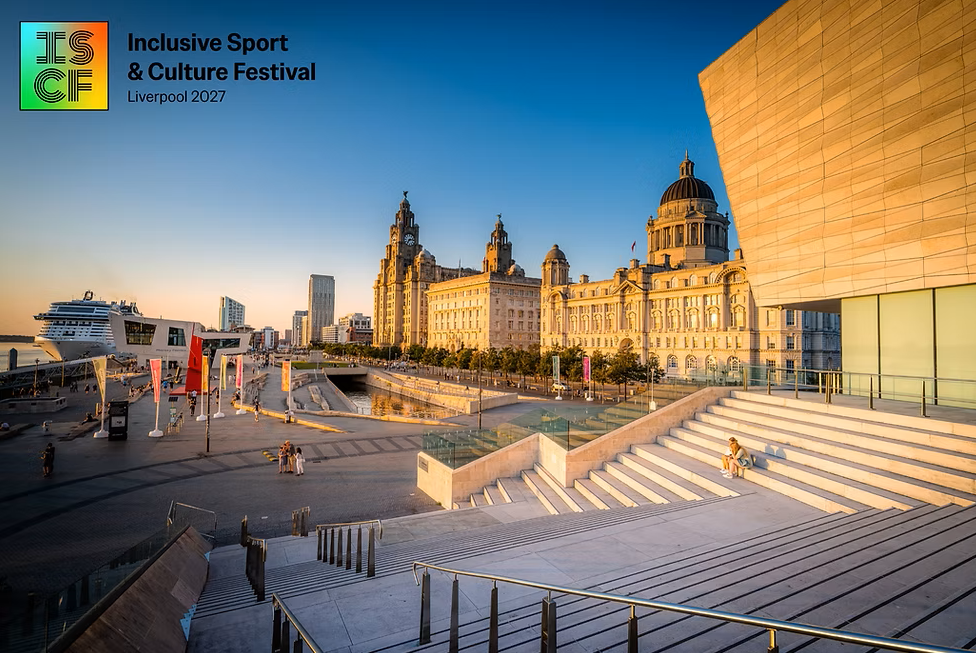
Liverpool’s inaugural Inclusive Sport and Culture Festival will make history in 2027, taking place alongside the Wheelchair Basketball European Championships in a landmark celebration of sport, culture and inclusion. UKEL will deliver both events, building on its expertise in bringing world-class international sporting events to communities across the UK in partnership with national governing bodies and local authorities.
UKEL’s ambition is simple: accessible and inclusive events should be the standard, not the exception. Through these events, UKEL aims to demonstrate how accessibility can be embedded into every stage of planning and delivery, creating experiences that are welcoming and enjoyable for everyone.
PUTTING INCLUSION BY DESIGN INTO PRACTICE
Accessibility is not an afterthought for UKEL. It is a core principle that shapes every aspect of their event planning and delivery. Guided by an “inclusion by design” approach, they consider accessibility from the earliest stages of development through to the spectator experience.
This includes reviewing and improving:
- Ticketing and booking journeys
- Accessible seating provision
- Venue facilities and infrastructure
- Spectator communications and information
- Event services and customer support
- Accessibility guidance for visitors before and during events
To ensure disabled people’s needs are understood and reflected throughout the planning process, both events have dedicated steering groups made up of people with lived experience. Their insight, expertise and guidance play a critical role in shaping decisions and helping UKEL to create truly inclusive experiences.
WHY ACCESSIBILITY MATTERS TO UKEL
The Inclusive Sport and Culture Festival and the Wheelchair Basketball European Championships provide a unique opportunity to challenge perceptions, remove barriers and demonstrate what inclusive event delivery looks like in practice.
By bringing together elite-level sport with disabled-led arts and cultural programming, UKEL wants to celebrate talent and highlight the challenges disabled people can face in everyday life and the opportunities that exist when accessibility is prioritised from the outset.
The goal is not only to deliver accessible events, but also to encourage wider change across the sector by showing that inclusive design benefits everyone and should be considered a fundamental part of event planning. UKEL is equally committed to sharing their learning and collaborating with others to help raise standards across the industry.
THE IMPACT SO FAR
The response to UKEL’s vision and ambitions has been overwhelmingly positive. Partners, stakeholders and contributors have embraced the commitment to accessibility and inclusion, recognising the importance of embedding these principles into every stage of event delivery.
The introduction of lived-experience steering groups has strengthened decision-making and ensured accessibility remains central to planning. The steering groups have provided invaluable insight and helped UKEL to identify opportunities to improve the experience for disabled attendees.
The organisation has also embedded accessibility and inclusion requirements into their procurement policies and processes. This has encouraged meaningful conversations with suppliers and partner organisations about how they can contribute to creating more accessible experiences. As a result, accessibility is increasingly viewed as a shared responsibility rather than a standalone consideration.
ADVICE FOR OTHER ORGANISATIONS
UKEL Social Impact and Sustainability Lead, Jessica Padley:
“Don’t aim for perfection, aim to make a start and create progress. Be honest about what you know and where there may be gaps in your understanding. Invest time in learning about accessibility and inclusion, and review your services, processes and customer experience through that lens. Doing so will quickly highlight opportunities to make meaningful improvements.
Most importantly, involve disabled people throughout the process. Their lived experience provides invaluable insight and helps ensure that services, events and environments are genuinely accessible and fit for purpose. Accessibility is most effective when it is designed with people, not for them.”
Support and Guidance Used
One of the most valuable lessons UKEL have learned is the importance of listening directly to disabled people. Seeking their views and lived experience has helped inform the organisation’s planning, challenge assumptions and ensure that accessibility remains central to decision-making.
By combining lived experience with a commitment to continuous learning and collaboration, UKEL are working to create events that are welcoming, inclusive and accessible for all.
FIND OUT MORE
To learn more about UKEL and its work delivering major international sporting events, click HERE.
Click HERE to find out more about the Inclusive Sport and Culture Festival and HERE for the Wheelchair Basketball European Championships.
Organisations looking to strengthen accessibility and inclusion within their services, venues, events or customer experience can also access practical guidance, resources and best practice through the Liverpool City Region Accessibility Toolkit HERE.