


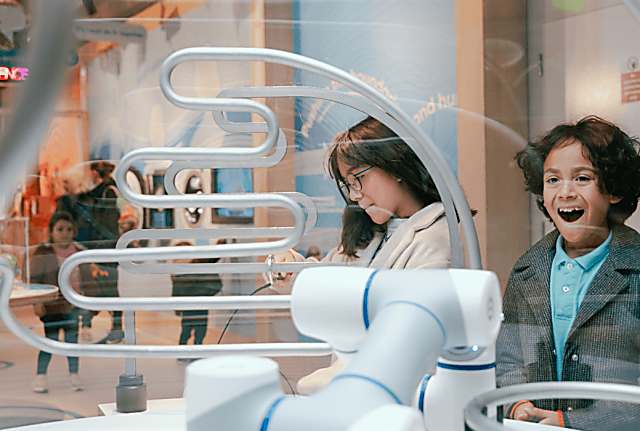
Designing accessibility in from the start through co‑creation
ABOUT THE ORGANISATION
Eureka! Science + Discovery is an interactive science centre situated in Wallasey’s Seacombe Ferry Terminal building, created to spark curiosity and learning through hands‑on STEAM experiences for children, young people and families. From its earliest planning stages, the organisation has focused on inclusive, play‑based learning, with a clear aim: every visitor should be able to fully engage with and enjoy what’s on offer.
THE CHALLENGE
Science centres are often busy, noisy, highly visual environments. For some visitors, particularly disabled children and young people, that can create barriers to participation. Eureka! wanted to ensure accessibility was not treated as an add‑on, but as a fundamental part of the visitor experience.
WHAT THEY DID
Accessibility was embedded into the design process through co‑creation with disabled children and young people, ensuring lived experience shaped decisions from the outset. Alongside this, Eureka! introduced a wide range of practical measures to support different access needs, including:
- Sensory bags available to borrow during visits
- Quiet chill‑out spaces
- Step‑free access, lifts between floors, and accessible toilets, including Changing Places facilities
- Hearing support systems and resources for visitors with sensory or visual needs
Clear, accessible information was also prioritised. Visitors can plan ahead using downloadable visual guides, an accessible transport and accommodation guide, and detailed information hosted on AccessAble. NaviLens QR codes provide additional on‑site support, and accessible events and improvements are regularly shared.
THE IMPACT
The organisation has seen a noticeable increase in visitor confidence, with people better able to understand what to expect and how to access the space. Feedback consistently highlights the inclusive atmosphere and the confidence and knowledge of staff. Externally, Eureka!’s approach has been recognised through an Accessible & Inclusive Tourism Award, with judges praising both the breadth of provision and the strength of staff support.
BEST‑PRACTICE HIGHLIGHTS
- Co‑designing spaces and experiences with disabled users
- Providing clear, accessible pre‑visit information
- Designing for sensory as well as physical access
- Embedding accessibility into organisational values
ADVICE TO OTHERS
For Eureka!, accessibility is most powerful when it’s designed in from the outset, not retrofitted or treated as a separate strand of work. The organisation’s experience has shown that involving disabled children and young people early leads to better decisions, more engaging spaces, and a stronger sense of belonging for everyone.
Liz Peniston, Director of Content and Visitor Experience at Eureka!, sees accessibility as a shared responsibility across an organisation: from design and communications to frontline delivery and daily interactions. She believes that listening, planning ahead and equipping staff with confidence are just as important as physical adjustments.
Reflecting on Eureka!’s journey, Michelle encourages organisations to see accessibility as an opportunity to embed inclusivity into their culture, rather than something to layer on afterwards:
“Make accessibility part of your organisation from the start, not an add on. Take time to listen to your visitors, provide clear information in advance, and make sure staff feel confident supporting a wide range of needs.”
For more information on Eureka! Science and Discovery, click HERE.