


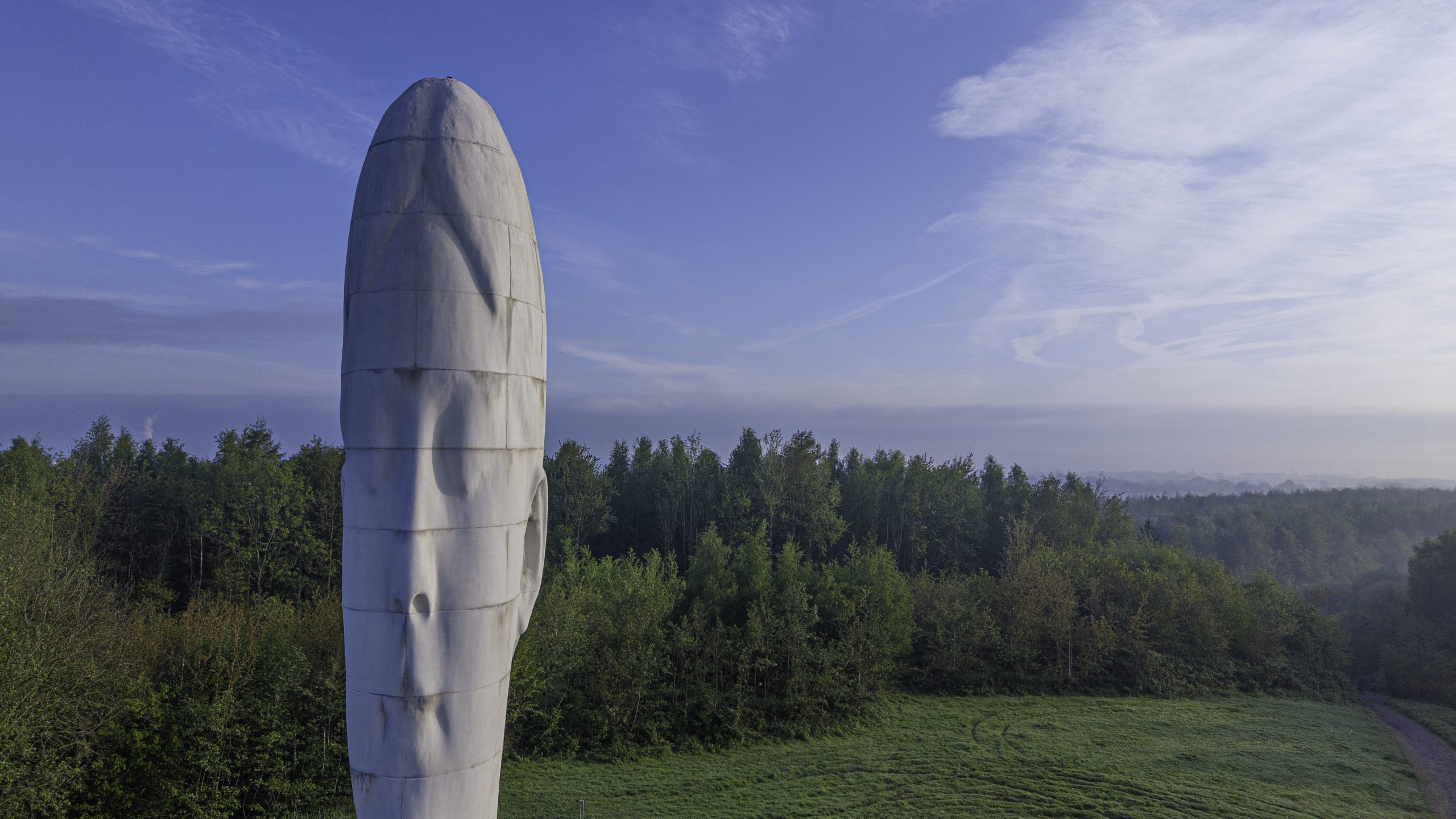
A former colliery turned wide-open woodland, a quiet walk that builds to something unexpected and a sculpture that asks you to slow down and look again. This is a place where the past lingers beneath your feet but the view ahead offers a rare sense of perspective.
This is The Dream. A 20-metre-high sculpture by artist Jaume Plensa, set at the highest point of Sutton Manor Woodland in St Helens, part of the Liverpool City Region. Rising from the former colliery site, its calm, closed-eyed face of epic proportions feels almost otherworldly — something harmoniously balanced between monument and myth. Not as a marker of what was here before, but as something altogether more open to possibility.
THE CLIMB
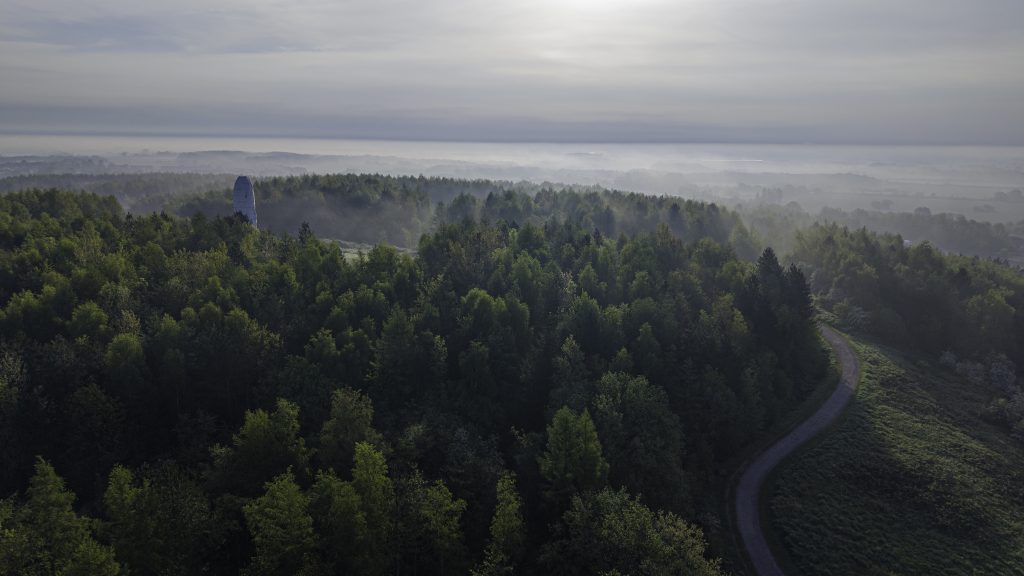
Aerial view of ‘The Dream’ sculpture in Liverpool City Region’s St Helens. – Copyright Straus Imagery 2026
It begins, as so many good experiences do, with a climb.
Not dramatic, nothing that demands boots or bravado, just a steady path that draws you upward through trees and open sky. The sound of the motorway slips away sooner than you expect. The air changes. And then, almost without noticing the moment it happens, you catch sight of it. At first, just a pale shape on the horizon, then something clearer, until you are standing in front of a vast, still face, eyes closed, something deep in contemplation.
FIRST IMPRESSIONS
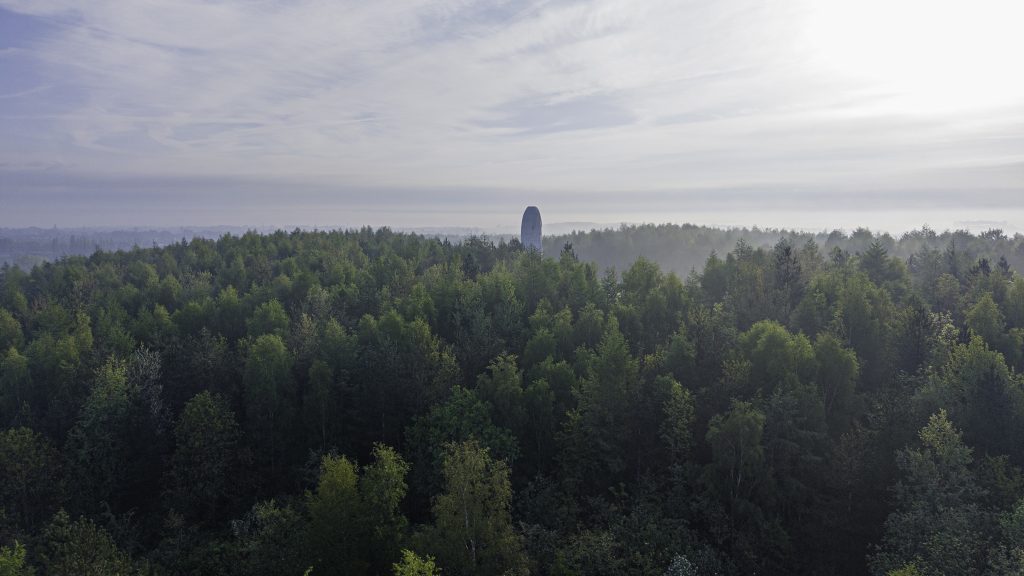
Aerial view of ‘The Dream’ sculpture in Liverpool City Region’s St Helens. – Copyright Straus Imagery 2026
Rising high above the summit of Sutton Manor Woodland, it is one of Liverpool City Region’s most quietly memorable works of public art, a sculpture that feels both monumental and strangely personal. It takes the form of a young girl’s head, her eyes wide-shut, her expression calm but hard to read. Up close, the scale is striking, but it never quite overwhelms you.
The surface catches whatever light the day offers. In sunshine it almost glows, on duller days it softens, blending into the sky, shifting subtly hour by hour.
But what gives The Dream its weight is not just what you see. It is where you are standing.
FROM COAL TO QUIET
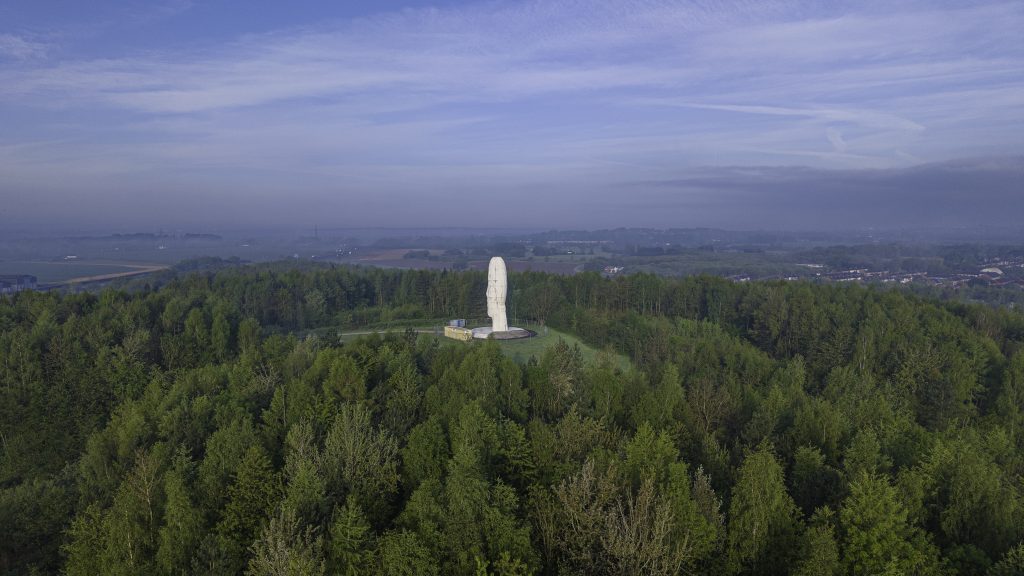
Aerial view of ‘The Dream’ sculpture in Liverpool City Region’s St Helens. – Copyright Straus Imagery 2026
The ground beneath your feet has its own history.
This hill was once part of a working colliery, a place shaped by industry, labour and coal seams formed over millions of years, that still sit just below the surface. When the pit closed in the early nineties, the land was left in limbo, no longer what it had been, not yet anything new.
What followed was a quiet, deliberate change. More than two million trees were planted across the site, reshaping it into woodland that now feels established and lived in. You hear birds before you see them. Gravel shifts underfoot. People pass, some heading up, others already on their way back down.
Paths curve gently across the former spoil heap, guiding you through the landscape rather than forcing a route. It never feels rushed.
The Dream was unveiled in 2009, shaped not just by an artist’s vision but by local voices, including former miners who knew the land better than anyone. What they wanted was not a monument to the past, but something that looked ahead.
As a representative for St Helens Council put it:
“People were very clear; they didn’t want something that just looked back. They wanted something hopeful, something future-facing. The Dream gives people a reason to come here, to spend time here. It gives the area a surreal silhouette and a brilliant focal point that, once seen, isn’t easily forgotten and in doing that, it’s helped turn this into somewhere people feel part of again.”
That thinking is visible in the sculpture itself. Its bright white finish stands in deliberate contrast to the coal beneath, a simple, powerful shift from what was to what might be.
THE JOURNEY UP
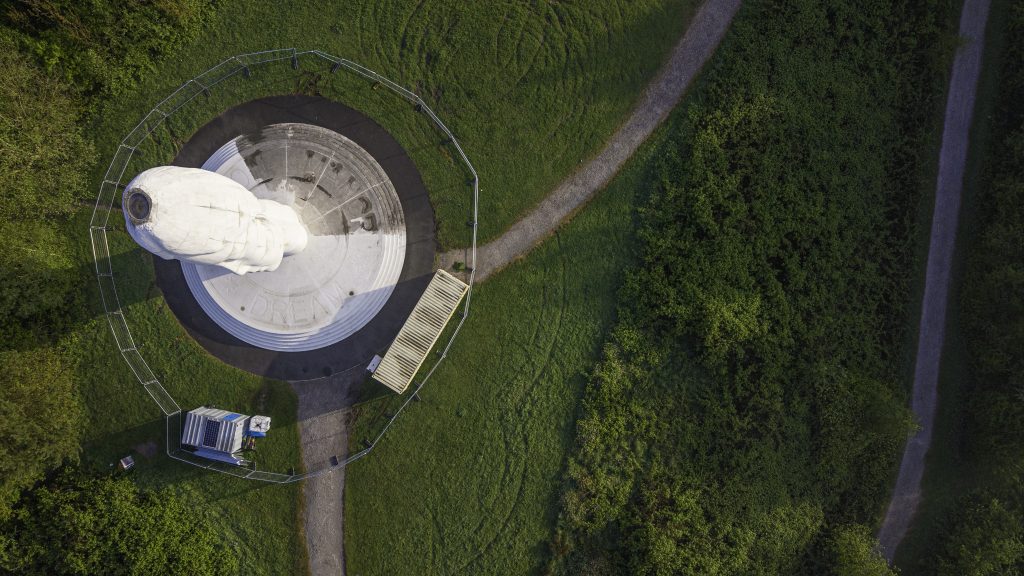
Aerial view of ‘The Dream’ sculpture in Liverpool City Region’s St Helens. – Copyright Straus Imagery 2026
Getting there is part of the experience.
From the edge of the woodland, the paths lead you through a landscape that feels unforced. Dog walkers pass with easy familiarity, families follow the trails, children drift ahead towards the summit. There are benches set back from the main paths, some used, some waiting, and perfect picnic spots that seem purpose-built for longer pauses.
The routes vary. Some are level, some gradually rise. The last stretch asks a little more of you, enough to make you aware of the climb, but never enough to put you off.
Then the trees fall away.
At the top, the sculpture sits on a circular plinth, a small but telling nod to the miner’s tally discs once used underground. It’s the kind of detail you might miss on a first visit, but one that anchors the place once you notice it.
THE VIEW
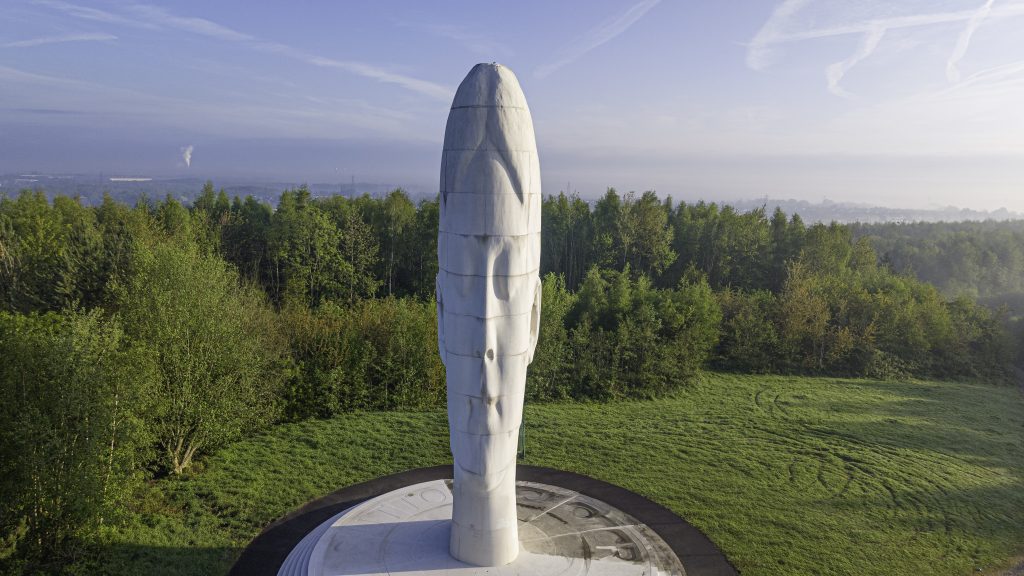
Aerial view of ‘The Dream’ sculpture in Liverpool City Region’s St Helens. – Copyright Straus Imagery 2026
Then the view opens up.
On a clear day it stretches far beyond what you might have expected, across open land towards distant hills, with the faint outlines of both Liverpool and Manchester sitting quietly on the edge of the horizon. Nothing feels crowded. Nothing competes for your attention.
You find yourself standing still for longer than you meant to.
A DIFFERENT KIND OF LANDMARK
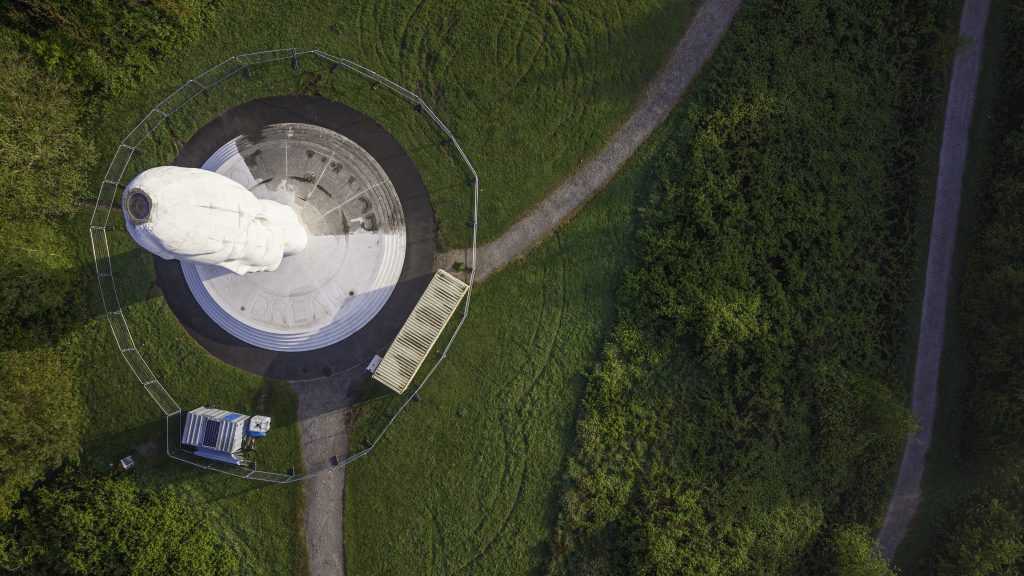
Aerial view of ‘The Dream’ sculpture in Liverpool City Region’s St Helens. – Copyright Straus Imagery 2026
From the motorway below, tens of millions pass this spot each year, catching only a glimpse of the white head rising above the trees. It looks like something you mean to come back to and perhaps most never do. But it’s worth the pause, the small detour, the moment to see it properly.
Up here, once you’ve arrived, it becomes something else entirely.
People move around it slowly. Some take photographs, others sit, a few simply stand, taking it in or looking out beyond it. There is no obvious way to engage with it, no instruction. You are left to decide what it means, or whether it needs to mean anything at all.
That is part of its quiet strength. It allows space, not just physically but mentally.
SPACE TO BREATHE
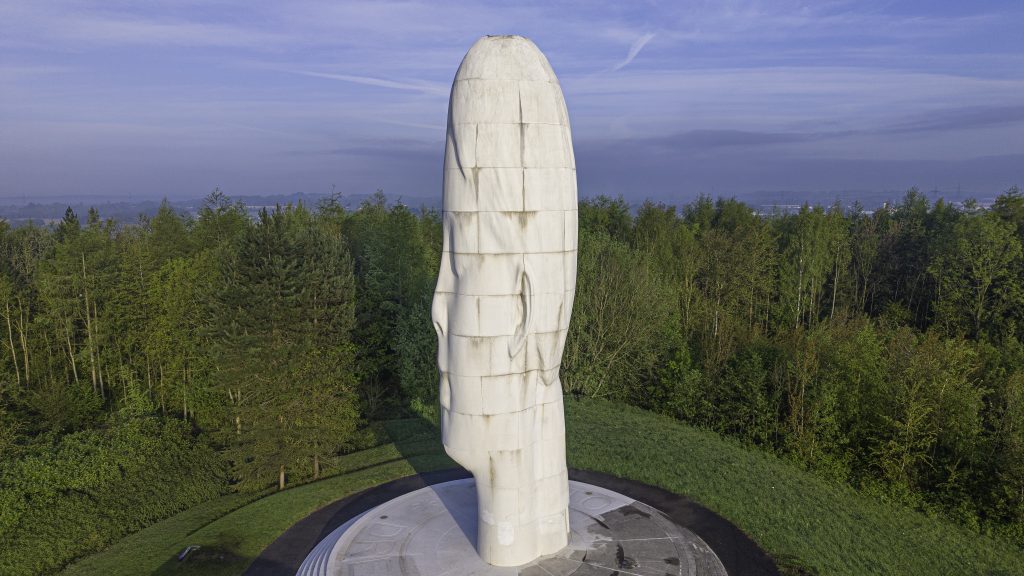
Aerial view of ‘The Dream’ sculpture in Liverpool City Region’s St Helens. – Copyright Straus Imagery 2026
Places like this have a way of resetting your pace without you really noticing.
The walk up, the shift from enclosed paths to open ground, the satisfyingly serene pause at the top, it creates its own rhythm. At some point, you realise you have slowed down. Your breathing settles. The noise you arrived with does not quite follow you all the way up.
There is nothing complicated about it.
It is is simply a place where your head clears.
THE WALK BACK
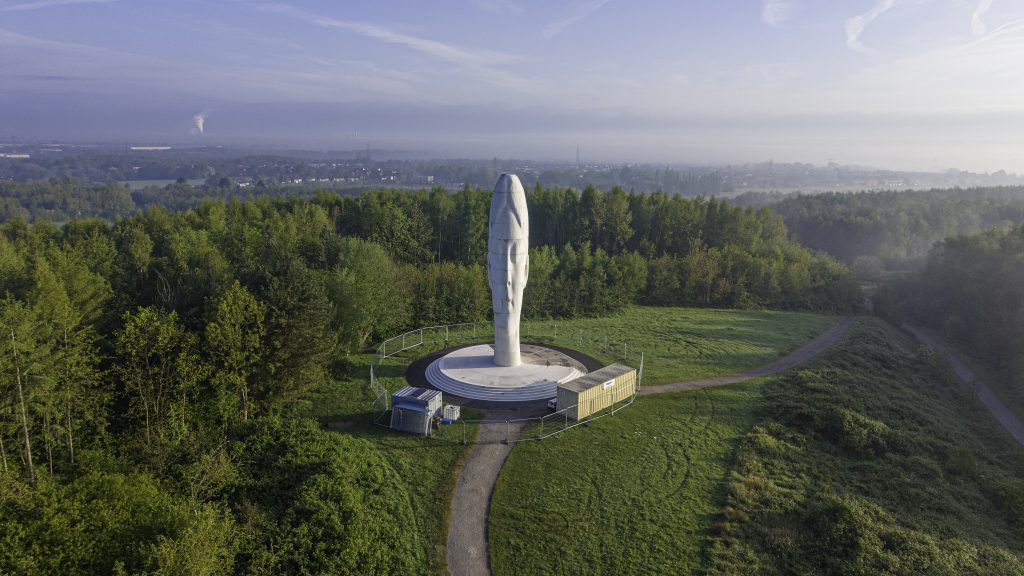
Aerial view of ‘The Dream’ sculpture in Liverpool City Region’s St Helens. – Copyright Straus Imagery 2026
Eventually, you turn back.
The route down feels shorter. The paths are familiar now. The Dream slips out of view, first behind you, then below the skyline, until it is gone altogether. The trees close in again, the sounds return, the world begins to gather pace.
But something from the summit stays with you.
Because The Dream is not just about arriving. It is about the full experience, the first glimpse, the steady climb, the stillness at the top, and the quiet shift that comes with it.
You start the walk not quite knowing what you will find.
You leave feeling, unexpectedly, a little more awake, a little more hopeful and ready to face what lies ahead.
To learn more about The Dream, its history and how to visit, click HERE.