


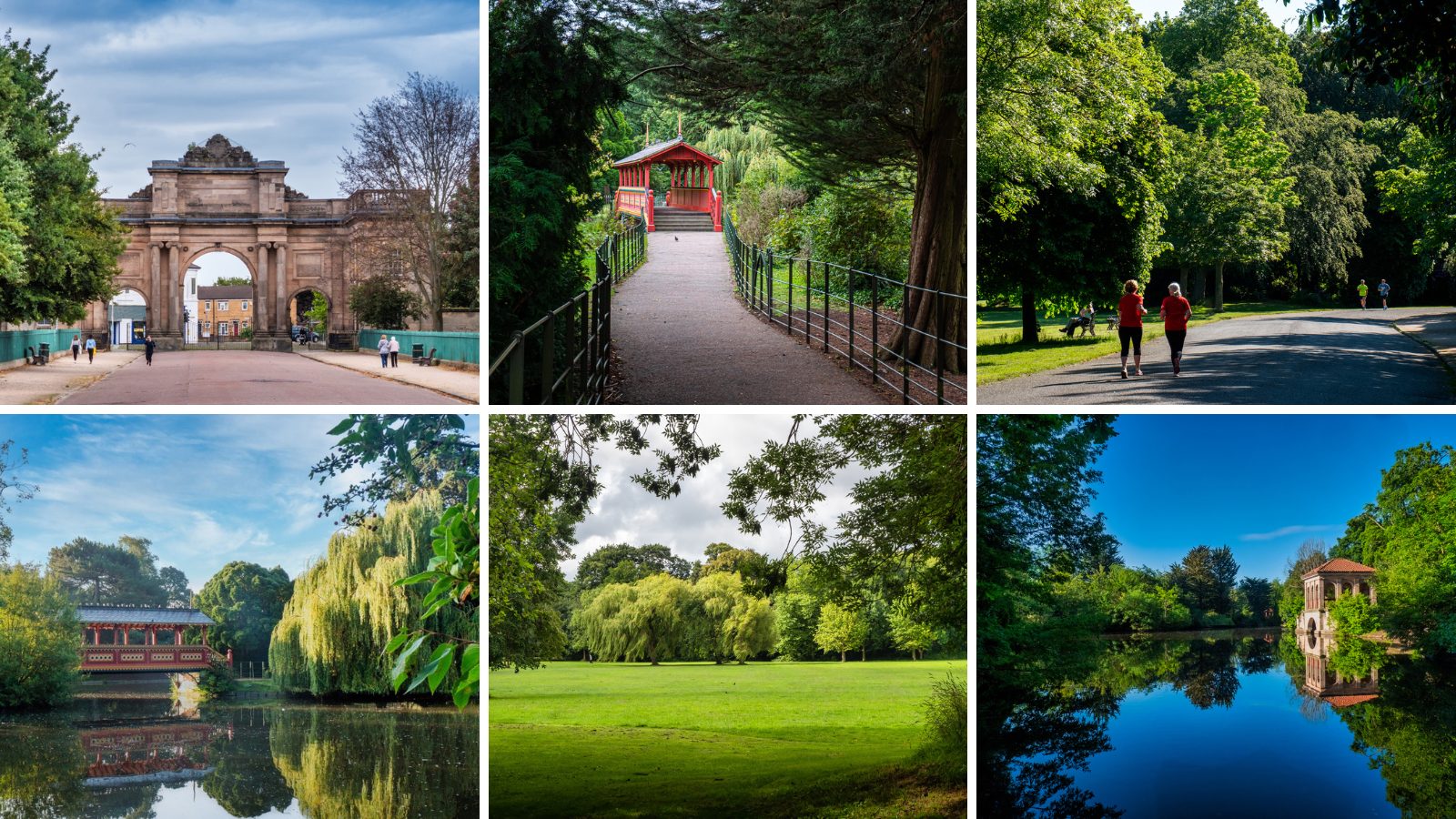
The first thing I notice is the sound. Or rather, the absence of it. No traffic, no urgency, no city clatter. Just birdsong, water lapping quietly at stone, and the soft rhythm of runners passing behind me. I am only a short journey from Liverpool City Centre, yet it feels as though I’ve stepped into another world.
A light mist hangs over the lake, bridges emerge slowly through the trees, and open paths stretch far ahead, inviting you to explore at your leisure. Birkenhead Park does not announce itself. It welcomes you in, lowers your shoulders, and gently shifts your sense of wellbeing to a calmer place.
As I walk further in, it becomes clear this is not simply a beautiful park, or a nice green space, or a park like any other. This is a place designed with intent, steeped in history, and a place that’s given birth to ideas that have travelled far further than its paths ever could.
A RADICAL IDEA, BORN ON THE WIRRAL
Birkenhead Park opened in 1847 as something entirely new. The world’s first purpose‑built, publicly funded civic park, created not for landowners or private members, but for everyone. At a time when green space was locked away, this one threw its gates wide open.
At the heart of that vision was Joseph Paxton, one of the most influential designers of the nineteenth century, whose belief in light, space and nature shaped everything from great gardens to civic landmarks. Here, Paxton imagined a landscape that could restore body and mind at once, offering beauty, movement and calm as part of everyday life, not a luxury reserved for the few.
When American writer Frederick Law Olmsted visited, he was struck by how freely the park could be enjoyed. He later wrote that “the poorest British peasant is as free to enjoy it in all its parts as the British Queen.” That democratic ideal stayed with him, later shaping the design of Central Park in New York and, through it, the global language of urban public parks around the world.
Steve Rotheram, Mayor of Liverpool City Region, sees that legacy as central to the park’s power today.
“Birkenhead Park changed the way the world thinks about public parks,” he says. “The idea that began here, that well designed, high quality green space should be open to everyone, travelled across the Atlantic and shaped cities around the world. That connection is something we should be incredibly proud of.”
Walking here now, that global influence feels almost understated. Nothing shouts. Everything works.
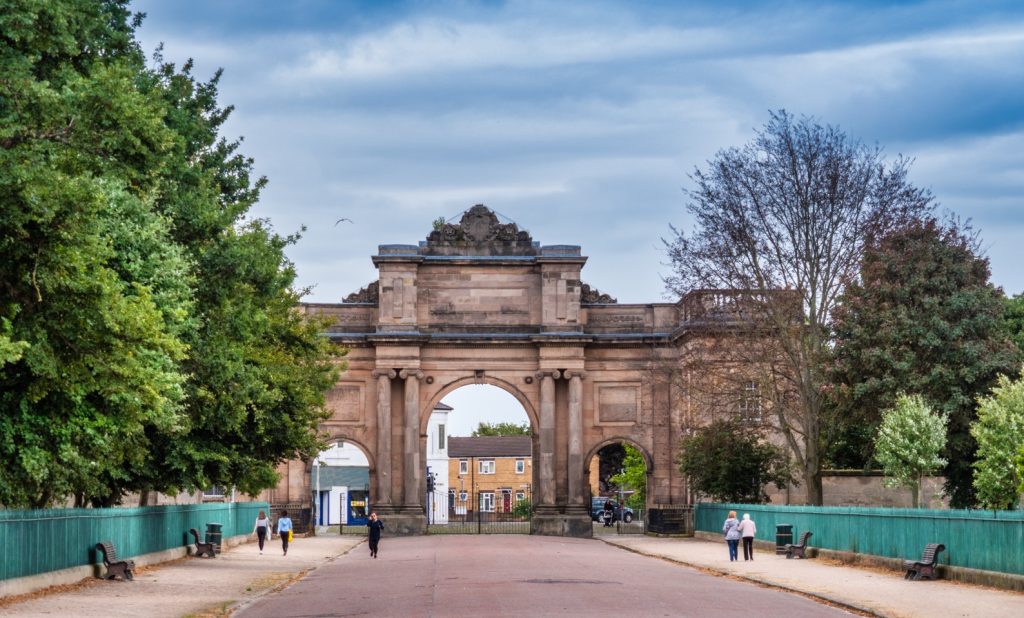
An historic entrace to Birkenhead Park
DESIGNED FOR MOVEMENT, MADE FOR EVERYDAY LIFE
If this were only a historic landscape, it would still be remarkable. But Birkenhead Park is alive with activity.
On Saturday mornings, the park hums with anticipation as the parkrun begins. Walkers, joggers, runners and volunteers set off together, threading their way through a Victorian landscape designed, quite deliberately, to support health and vitality.
During the week, social running groups circle the lakes, guided wellbeing walks set off from the visitor centre, and people reclaim time outdoors between work and home. There is no pressure here, no hierarchy, no sense you must be anything other than present.
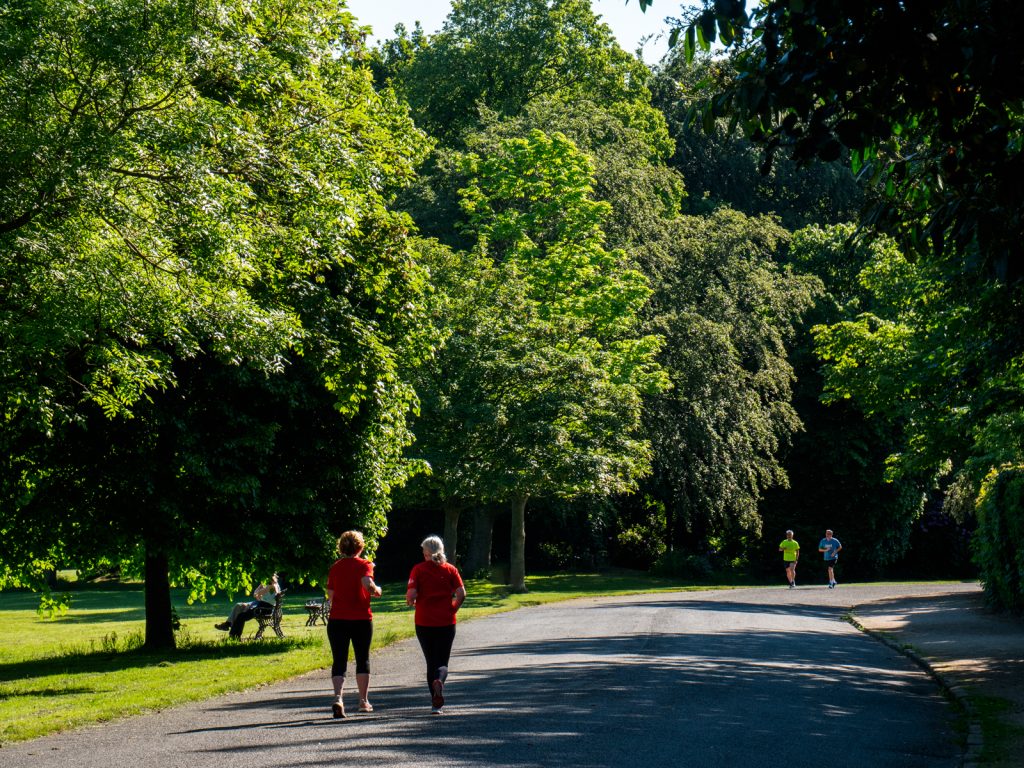
Birkenhead Park – walkers enjoy a long stroll.
A PLACE WHERE EVERYONE FINDS THEIR OWN RHYTHM
As I keep walking, the park gently buzzes with life. By the lake, people stop mid‑stride to point out birds skimming the water, cameras lifted, conversations hushed. On the grass nearby, families spread out blankets, children dashing off then circling back, pockets full of discoveries.
Close to the visitor centre, a guided walk pulls together, strangers becoming companions as they set off chatting, while volunteers in the community growing area work the soil, laughing, swapping advice, hands dirtied in the best possible way. Tennis balls crack against rackets, cricketers mark out their space, and under the trees a small fitness session kicks into rhythm.
Some people are passing through with purpose, others are clearly in no hurry at all, reading, sketching, sitting quietly and watching the world go by. What I love most is how naturally it all fits together. Birkenhead Park doesn’t push anyone into movement or stillness. It simply makes room for both and lets people find their own pace.
You feel that ethos everywhere. Movement feels natural, not forced. Activity blends seamlessly with rest.
A PARK WITH A REACH FAR BEYOND ITS PATHS
The longer I spend here, the more I sense that Birkenhead Park is carrying more than it lets on. This is not just a well-preserved Victorian landscape. It is unusually complete, unusually confident in its purpose. Every path, lake and open space feels intentional, designed not to impress visitors, but to serve people, generation after generation.
It became evident to me that this quiet confidence is why the park’s influence travelled so far. The principles born here, free access, health through nature, beauty as a public good, did not stay on the Wirral. They helped shape city parks across the world. Seen in that light, it is easier to understand why Birkenhead Park is now being discussed in a much wider conversation.
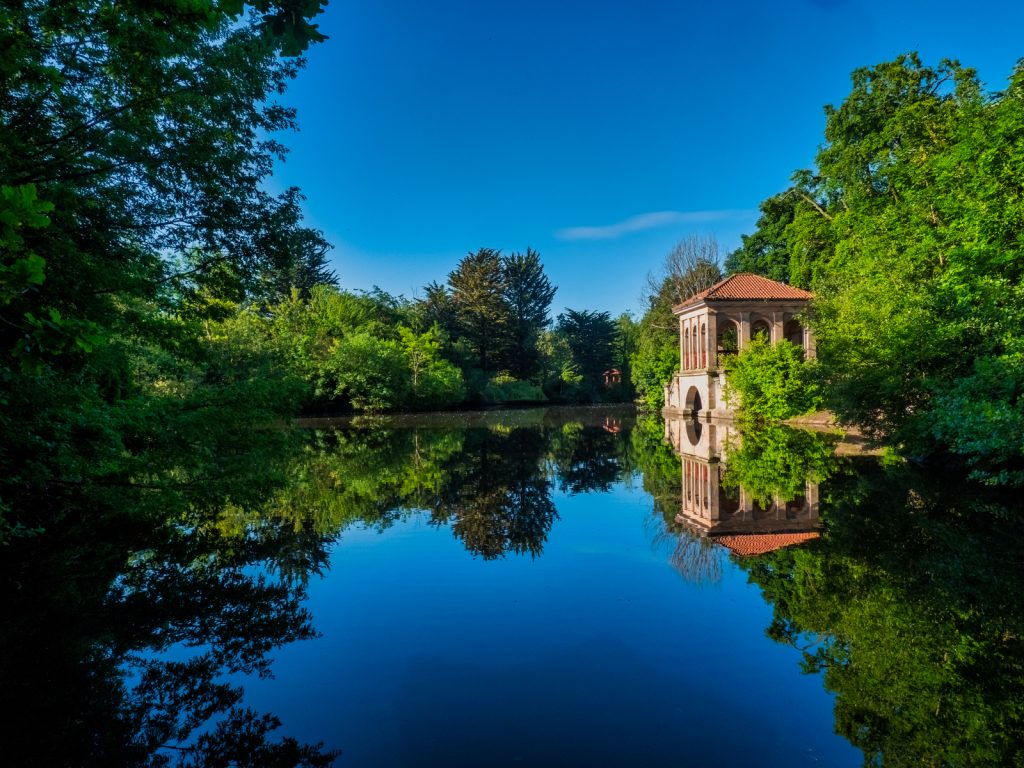
Birkenhead Park – Lake View
WHY THE WORLD IS STARTING TO LOOK THIS WAY
In recent years, a growing number of voices have begun asking whether Birkenhead Park’s importance has ever truly been recognised. The result is an ambitious plan, led by Wirral Council and supported by the Friends of Birkenhead Park, to seek UNESCO World Heritage status. But crucially, those closest to the park are clear that recognition must never change its character.
RECOGNITION, WITHOUT LOSING WHAT MATTERS
My visit to Birkenhead Park is not simply an excursion. I’ve arranged to meet Marie Le Dévéhat, World Heritage Project Officer at Wirral Borough Council, inside the park’s Visitor Centre gallery, where paintings, sculptures and historic photographs trace the park’s story through time. Surrounded by images of Birkenhead Park across the decades, she begins to talk about the delicate balance shaping its future.
“Birkenhead Park was always meant to be lived in. Its primary nature is, and always will be, as a public park, a place for everyday life. Any growth as an international visitor attraction has to work in harmony with that, not compete with it.
“The reason this park is so powerful is because it works first and foremost for the people who use it every day. Our aim is to elevate the experience for everyone, improving the welcome, the wayfinding and the many ways people can engage with the park, through more events, better heritage interpretation and improved access and greater awareness.
“All of this sits within our wider masterplan for the park, which exists alongside the UNESCO ambition, but does not depend on it. The goal is simple, to make a great public park even better, while staying true to what it has always been.”
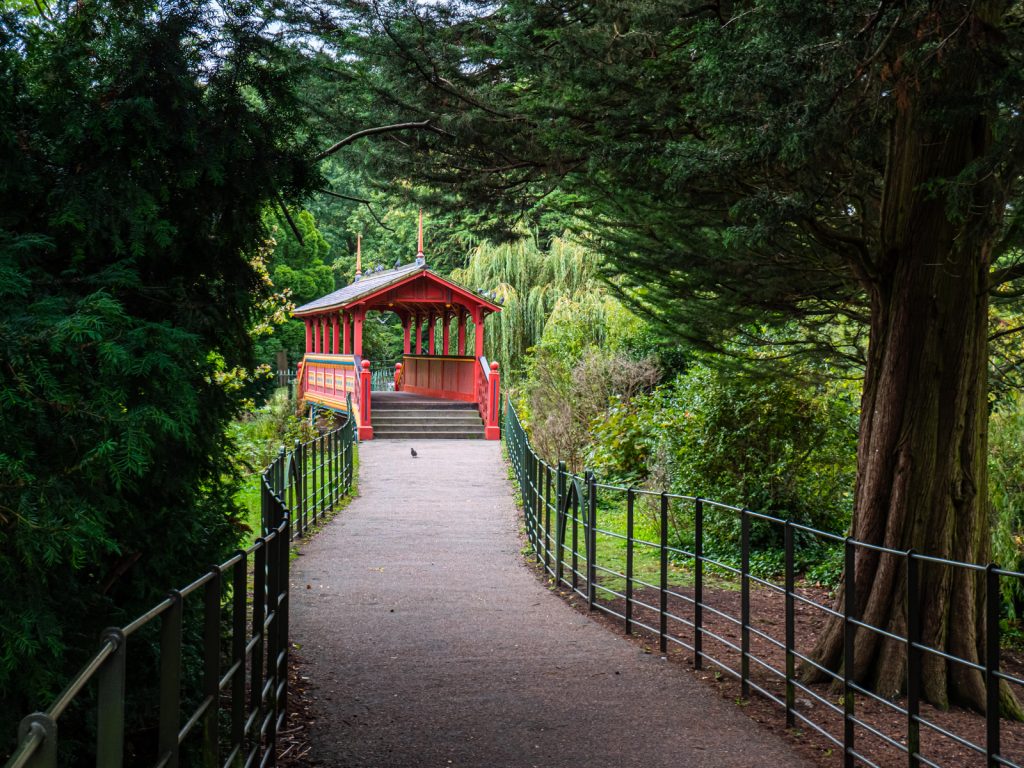
Birkenhead Park – Pathways lead to new discoveries
SLOW DOWN, AND THE PARK REVEALS ITSELF
I leave the busier paths and wander towards the water. The lakes are central to the park’s design, carefully shaped to feel natural while gently guiding the eye and the feet. Paths draw close, then drift away again, revealing bridges, quiet corners and sudden, cinematic views.
The Swiss Bridge feels playful, almost storybook. The Roman Boathouse, solid and calm, anchors the shoreline. Further on, the Grand Entrance still stands as a bold civic welcome, reminding visitors that beauty here was always intended as a public good.
Paxton understood that parks should restore as much as they impress. Sitting by the water, it is easy to see why this place continues to work so well.
THE PEOPLE WHO PROTECT THE PEOPLE’S GARDEN
One of the reasons Birkenhead Park feels so well loved is because it is. The Friends of Birkenhead Park have been caring for and championing this landscape for nearly fifty years.
Their work ranges from volunteering and conservation to education and community growing, but their role in pushing forward the park’s ambition to secure UNESCO World Heritage status has been particularly significant.
Graham Arnold, Truste and the Heritage Officer of the Friends of Birkenhead Park, puts it simply.
“Birkenhead Park matters because it proves that great public spaces improve lives. UNESCO recognition would not change what the park is, but it would help protect why it exists, as a shared space that puts people first in a landscape of beauty interspersed with its iconic structures.”
That balance between protection and progress is at the heart of the current bid. In 2023, Birkenhead Park was placed on the UK Government’s Tentative List for UNESCO World Heritage status, one of only seven sites put forward nationwide after a rigorous review process that happens roughly once every decade.
Inclusion on this list marks the formal first step towards full nomination, and it places Birkenhead Park in rare company, alongside places such as York’s historic centre and internationally significant cultural and natural landscapes across the UK.
If successful, the park would ultimately sit alongside household names like Stonehenge, Hadrian’s Wall, the city of Bath, the Tower of London and the Lake District, sites recognised not just for their beauty, but for ideas that changed how societies live, build and think.
What makes Birkenhead Park’s case so striking is that it would be the first purpose‑built public park anywhere in the world to achieve this status, recognition not of grandeur for its own sake, but of an idea born here, that access to green space should be free, shared and central to everyday life.
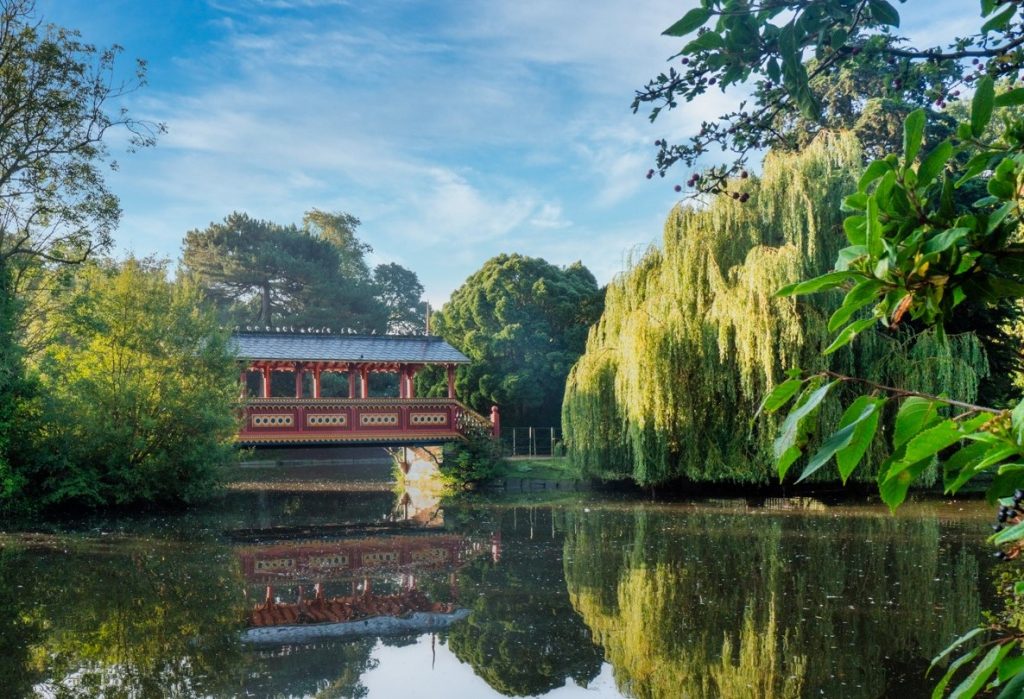
Birkenhead Park – A bridge to a beautiful green place
A GLOBAL STAGE, WITHOUT LOSING ITS SOUL
As our conversation takes us to the park’s popular cafe, Marie is keen to stress that ambition must always remain grounded. The prospect of UNESCO World Heritage status brings international attention, but the bidding team are clear about what that must not come at the expense of.
“There is real potential for Birkenhead Park to grow as an international visitor attraction,” says Marie Le Dévéhat. “But that growth has to be achieved in harmony with the park’s primary function, as a much-loved public space for Liverpool City Region’s residents. The enduring success of this beautiful place has always come from serving its community first.”
This approach feels reassuring. The ambition is not to turn the park into a destination divorced from daily life, but to recognise its global importance while strengthening its local role.
A SHORT JOURNEY, A LASTING IMPRESSION
As Marie and I part ways, the day begins to fade, I find myself back by the lake where my journey began. The runners have gone, the air has softened, and the water lies still. That same sense of calm returns, quiet and unmistakable.
Nearly two centuries on, Birkenhead Park is still doing exactly what it was designed to do. Supporting health, encouraging movement, offering beauty freely, and reminding us that access to green space is not a luxury, but a necessity.
If you live nearby, this park is waiting to be rediscovered. If you’re visiting Liverpool or exploring Liverpool City Region, it is closer than you think, and richer than you might expect.
To explore what’s on, plan your visit, and discover all the ways this remarkable place can fit into your life, visit birkenhead-park.org.uk and sign up for email updates. Step inside, take a breath, and let the People’s Garden work its quiet magic.